07 31 2026
Kyoto/Tokyo, Japan
Hayato Nishiyama
from Mitate
中学生の頃、古代エジプト文明に興味があり、毎号届く月刊専門誌を楽しみにしていたことがある。
ピラミッドやスフィンクスなどの巨大な石の建造物にも惹かれたが、とりわけ興味を持ったのは、ツタンカーメンなどの王族の装身具や衣装だった。
目の縁に描かれた青いラピスラズリやトルコ石、黒曜石などで色づけられた煌びやかな仮面の美しさに中学生ながら圧倒されたのだろう。
Shiharaの無駄を削ぎ落としたミニマルなデザインや幾何学的な構造美は、古代エジプトのそれとは色、形こそ違うものの、根底にあるものは似たところがあるように思うのは自分だけだろうか。どちらもそのもの自体に柔らかさは感じないが、身につける人の肌や動きを想像させるような心理的な柔らかさを持っている。
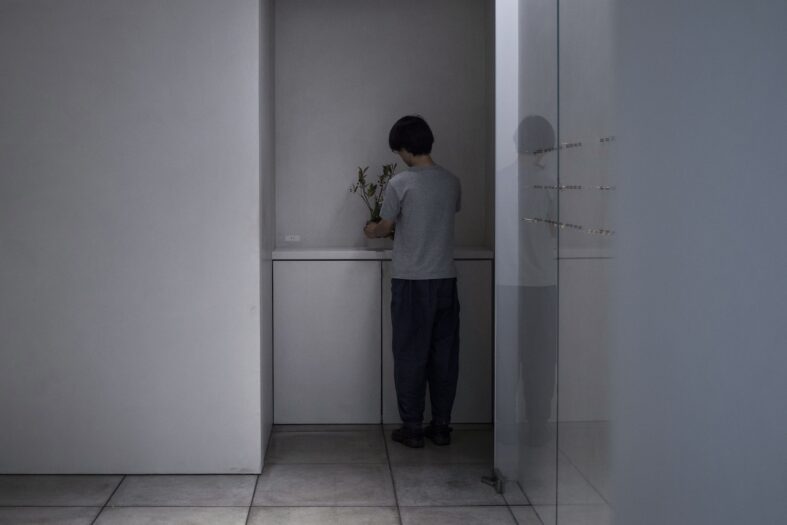
そう感じるようになったのは、Shiharaの店内の植物を担当させていただいて、しばらくたったころのことだ。
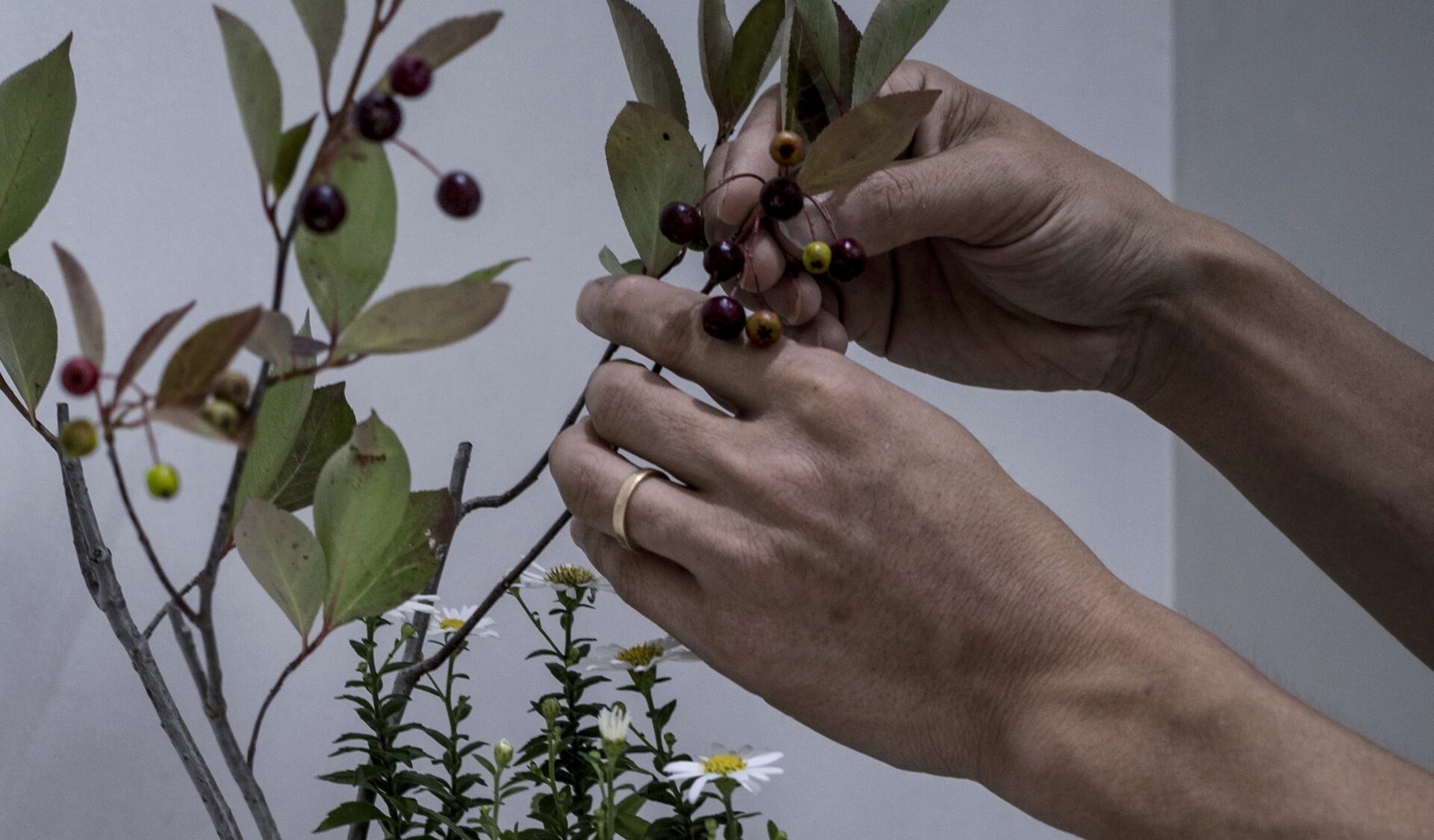
普段雑草のような野草を扱っている自分としては、研ぎ澄まされた空間に何をお届けしたらよいのか不安があったし、みたてとの接点を探すのに時間もかかった。
しかし何度かやり取りをしている間に、その雑草のような植物こそが、相容れないと考えていたジュエリーとその空間に必要なのかもしれないと思えるようになった。
それは、Shiharaの都市的なデザインの奥に、命あるものの存在を感じたからだ。
古代エジプトの王族に何千年も失われない輝きがあるのも、ジュエリーのもつ物理的な美しさに加え、王という絶対的な存在と、それを取り巻く人間や自然との関わり、生活や思想までもがジュエリーに刻まれているからに他ならない。
輝きは一瞬に過ぎないが、そこに関わる命あるものの存在こそが美を永遠のものにしているように思う。
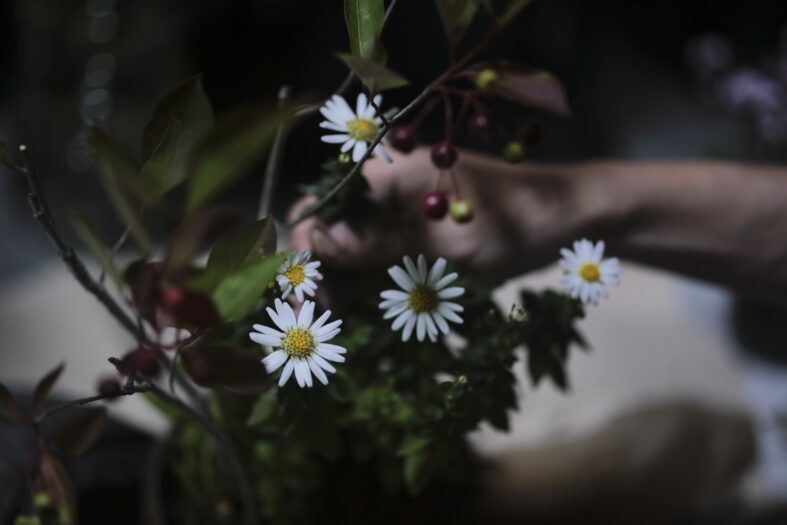
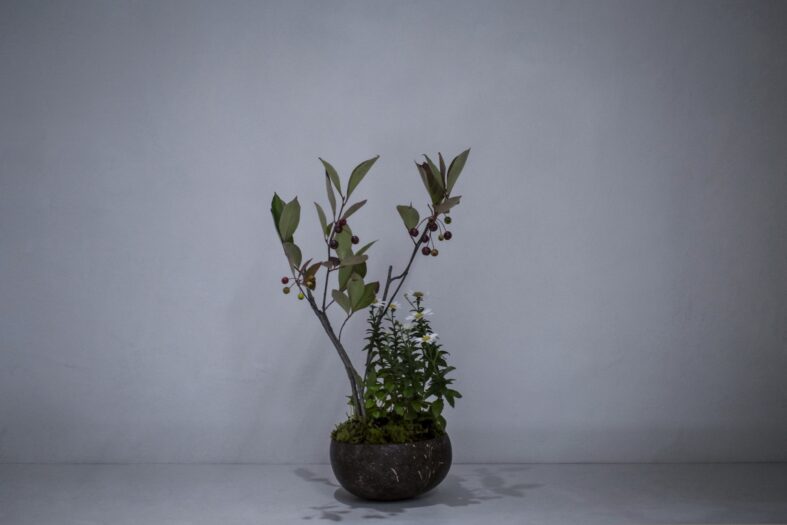
ジュエリーをジュエリーたらしめている命の象徴として野草があるならば、Shiharaの空間にそれが飾られることに意味がある。
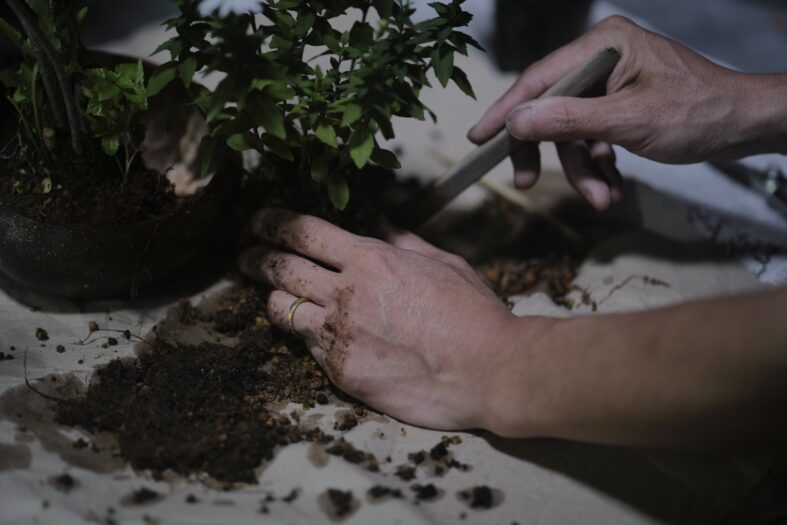
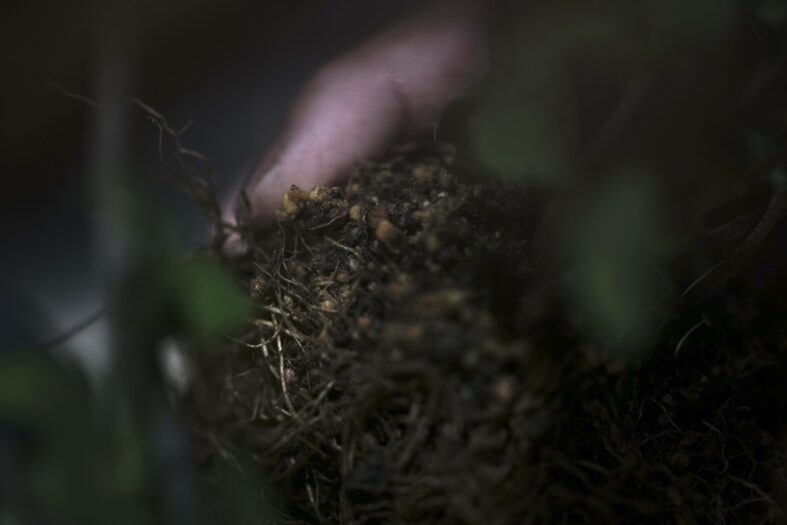
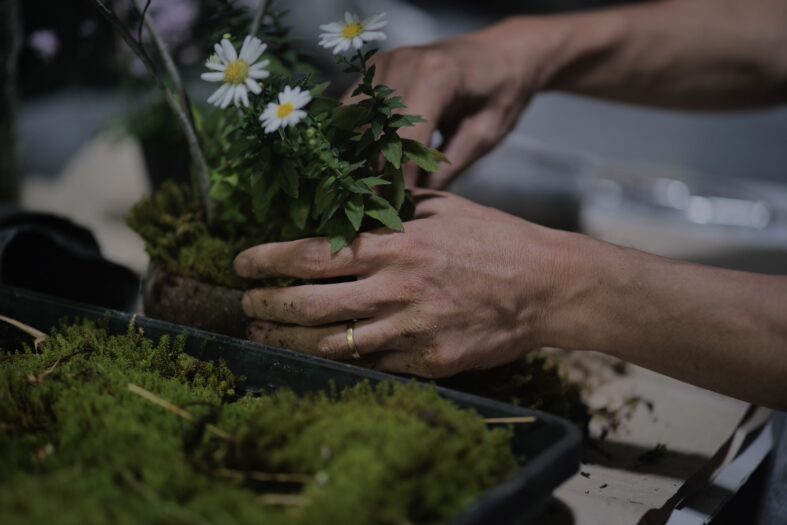
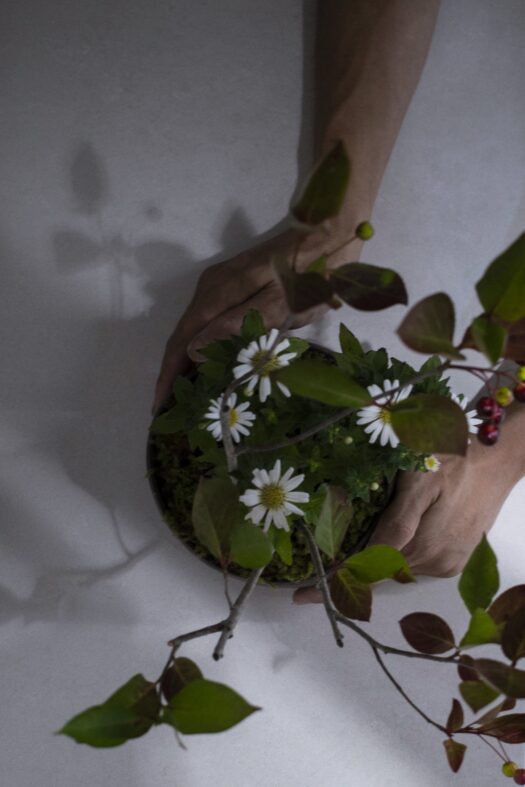
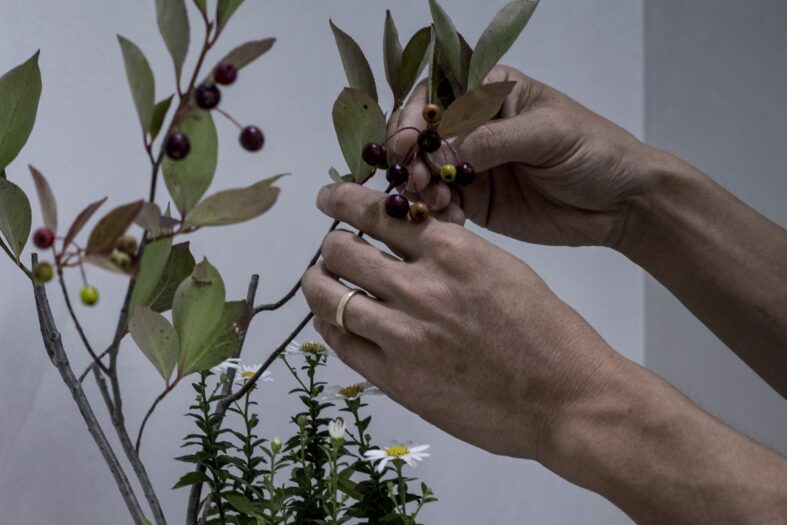
刻一刻と変化してやがて枯れる野草と永遠に輝き続けるジュエリーの対照的なふたつの関係性を探りながら、土を触り、根をほぐした。
Back in junior high, I was interested in ancient Egyptian civilization and looked forward to every new issue of a monthly magazine dedicated to the subject.
The pyramids, the Sphinx, and other monumental stone structures certainly captivated me, but above all, I was fascinated by the ornaments and attire of royalty such as Tutankhamun.
My junior high self was overwhelmed by the beauty of the resplendent mask colored by the blue of lapis lazuli inlaid around the eyes and by turquoise and obsidian.
Shihara’s minimal design stripped of the unnecessary and geometric structural beauty differ in color and form from the aesthetics of ancient Egypt, and yet there is something fundamentally similar about the two. Neither object is physically soft, but both evoke a softness that makes me imagine the skin and movement of the wearer.
It was some time after we began curating the plants in Shihara’s stores that I came to feel that way.
As someone who usually works with wild plants that most people would call weeds, I wasn’t sure what I could bring into such a refined space, and it took me some time to discover where Shihara and Mitate truly met.
But over the course of our conversations, I came to realize that the weed-like plants, which I had once thought were at odds with the jewelry, might actually be what the space needed.
That was because I sensed the presence of life within the depths of Shihara’s urban design.
The enduring radiance of ancient Egyptian royal jewelry lies not only in its physical beauty, but also in the way it bears the imprint of the pharaoh as an absolute presence, of the people and the natural world that surrounded the pharaoh, and even of the lifestyles and beliefs of their time.
Radiance is ephemeral, but I believe it is the life bound up in the jewelry that makes beauty eternal.
If wild plants are present as symbols of the life that gives jewelry its very essence, then there is meaning in displaying them within Shihara’s space.
We touched the soil and loosened roots as we explored the relationship between two contrasting entities: wild plants, which change from moment to moment before eventually withering, and jewelry that continues to shine into eternity.